The Archive at the Window: Documentary Clues to the Age of Domestic Glass
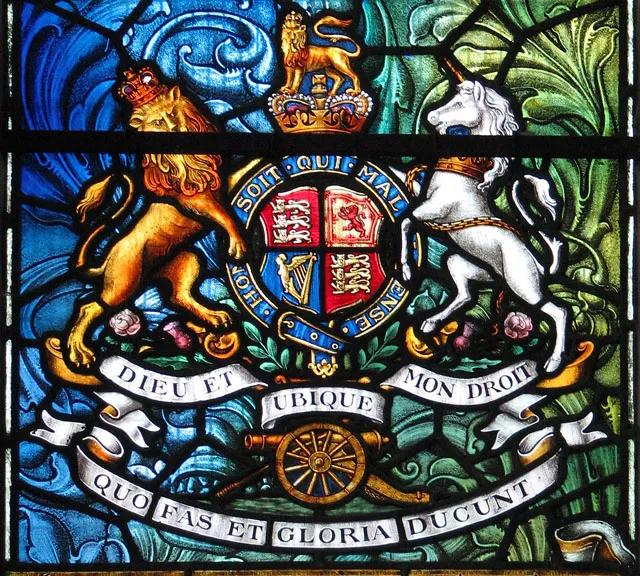
Photo: Evelyn Simak , CC BY-SA 2.0, via Wikimedia Commons
A stained or leaded window is rarely silent. Its lead profile, glass, painted detail and method of fixing all offer evidence, but the paper record surrounding a house can be just as eloquent. For owners of British period homes, documentary research is often the least invasive way to date domestic glazing, identify a probable workshop and recognise later alteration. The aim is not to prove a window's history beyond doubt from a single entry in a directory, but to build a measured case that complements close visual inspection.
Begin with the fabric, then test it against paper
Documentary dating should follow, not replace, careful looking. Before visiting a record office, photograph the window from inside and outside, note the lead profile, the size and arrangement of quarries, the presence of painted borders, stop-gaps, solder repairs and later secondary glazing. Record which openings appear original to the building and which sit within later additions. This fabric survey gives the documents something to answer. A directory entry for a glazier in the nearest town means little unless the window's detail and the house's construction already point towards a particular decade.
Trade directories and the workshop address
Local trade directories remain one of the most accessible starting points. Nineteenth- and twentieth-century volumes such as Kelly's, Pigot's and White's list glaziers, leaded light makers, painters and stained-glass artists by town and street. If a house was built in the 1880s and a nearby firm is recorded in the same decade as a plumber, glazier and painter, the entry may support a local commission, but it rarely identifies the individual window. Directories are best used to establish which workshops were active, where they stood and how their trades were described. Local studies libraries and county record offices usually hold runs of directories, and digital collections can help with preliminary searches.
Census returns and the household record
The census can add texture rather than certainty. Returns from 1841 to 1921 are available for England, Wales and Scotland, subject to the usual access arrangements, and they can establish when a house was occupied, who lived there and what occupations were recorded. A resident described as a glass painter or glazier is intriguing, but occupation alone does not prove that the householder made the window. Census evidence is more reliable for dating periods of occupation and alteration, especially when combined with deeds, rate books and sale particulars. It can also reveal changes in household status that might explain a later commemorative or decorative window.
Maps, plans and the shape of the opening
Ordnance Survey maps, especially large-scale town plans and county series, can show when bays, conservatories, porches and rear extensions appeared. A window that now seems embedded in the original wall may sit within an opening created at a later date. Local authority building control plans, deposited plans and estate surveys can be more precise still, particularly for Victorian and Edwardian suburbs. Maps should be read with care: revision dates are not construction dates, and a window opening may have been altered without leaving a plan. Even so, a sequence of maps can narrow the period in which a particular glazing scheme became possible.
Pattern books, catalogues and stock designs
Domestic stained glass often drew on standard patterns: quarries, borders, roundels, floral motifs and simple figure work supplied through catalogues. Pattern books and trade catalogues can help identify a design family, even when the exact maker is unknown. The archives of firms such as James Powell and Sons, Clayton and Bell, Ward and Hughes, and Heaton, Butler and Bayne are valuable for understanding the commercial vocabulary of the period, though domestic commissions are often less fully documented than ecclesiastical work. A matching border or quarry pattern is suggestive, not conclusive. It should be weighed alongside lead came, glass texture, painted treatment and the date of the house itself.
Record offices, deeds and makers' archives
County record offices hold estate papers, deeds, wills, inventories, household accounts and sometimes builders' specifications. For country houses and former estates, these can be remarkably detailed. The National Archives Discovery catalogue can point towards collections elsewhere, while local archive catalogues may list builders, architects and glaziers by name. Makers' archives can be especially useful when an address appears in an order book or job ledger, but absence of a record is not proof that a window is later. Many small commissions were never recorded, and many records have been lost. Documentary research should therefore proceed by accumulating independent clues rather than forcing a single source to carry the argument.
The discipline of negative evidence
A window may be older than the house, reused from elsewhere, or newer than the surrounding brickwork. Lead lines are replaced, quarries are broken and painted details are retouched. Photographs, postcards, insurance plans and sale catalogues can reveal earlier states of a façade, while later images may show when a window was inserted. Negative evidence is useful if handled honestly: the lack of a maker's mark, an absent directory entry or a missing archive reference should be recorded as a gap, not treated as a verdict. In domestic glass, the documentary trail is often partial by nature.
A practical sequence for owners
A sensible programme begins with a photographic and measured record of each window, followed by a house history using deeds, rate books and census returns. Local studies libraries can then be searched for directories and maps, and archive catalogues for builders, architects and glazing firms. Where the glass is fragile, any physical inspection should be non-invasive and undertaken with conservation advice. Removal should never be arranged simply to read a date or a maker's name. The resulting file, however modest, becomes a useful record for future owners and for any conservation work.
In 2026, with more catalogues and local records available online, the documentary route is easier to begin than ever, but it still rewards patience. The archive does not replace the evidence of lead and light. It gives that evidence a context, allowing a window to be read as part of a house's long life rather than as an isolated ornament.