Quiet Quarries: The Case for Leaving Plain Leaded Lights Alone
Photo: Oxfordshire County Council, Lindsey, 2019-10-10 12:19:03, CC BY 2.0, via Wikimedia Commons
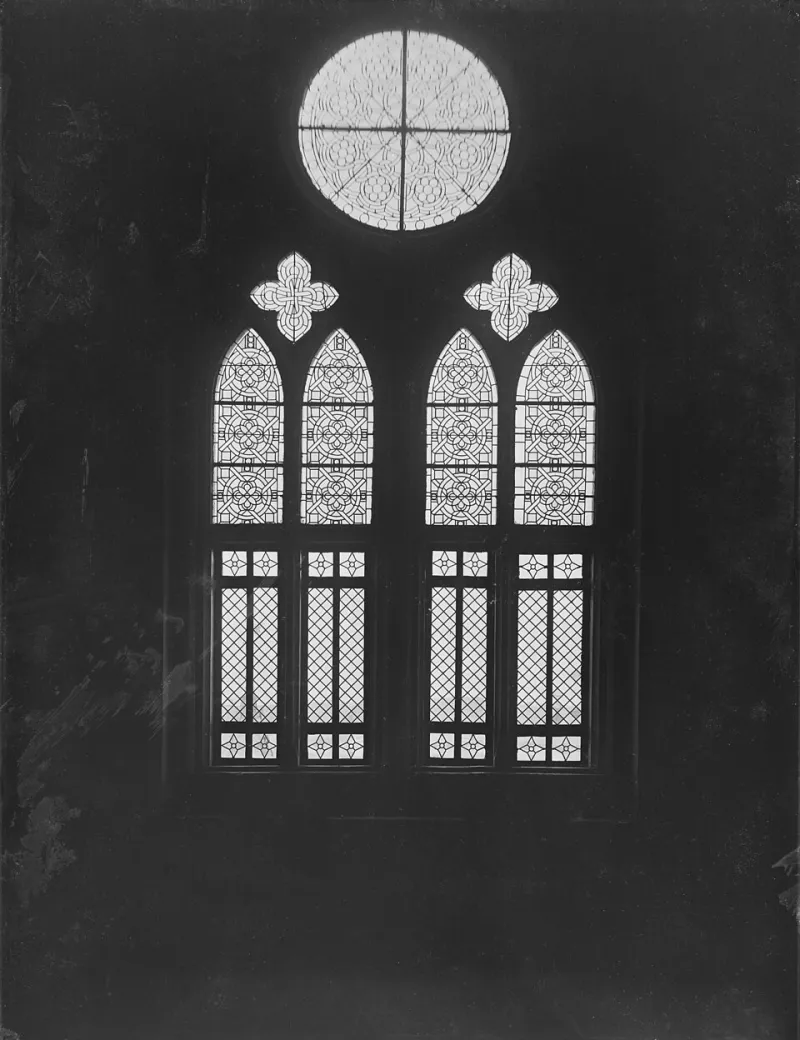
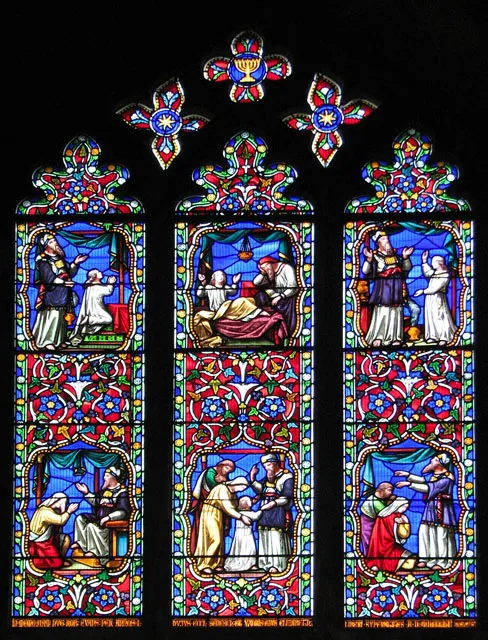
Colour attracts attention. It is the stained figure, the ruby border or the cobalt roundel that draws the eye across a street and persuades a visitor to look twice. Yet in many British period houses the original glazing was never coloured at all. It was plain leaded glass: quarries, squares, modest margins, occasional bullions, perhaps a simple decorative quarry or a band of tinted glass used for emphasis rather than display. These windows are quiet, and quietness is easily mistaken for absence.
The argument of this essay is straightforward. Not every historic window needs colour, and not every uncoloured window is waiting to be improved. In the right house, plain leaded lights carry an architectural integrity that added stained glass can obscure. The conservation question is not whether colour is beautiful — it plainly can be — but whether it belongs to the building in question.
The assumption of colour
There is a persistent assumption among renovators that a period house should have a decorated window. The assumption is understandable. Stained glass is memorable, photogenic and associated with churches, civic buildings and the more ambitious domestic work of the Victorian and Edwardian periods. It also signals care. A house with coloured glass appears loved in a way that a house with plain quarries may not.
But the assumption can lead to a well-meaning misreading. A Georgian townhouse with large sash windows was not designed around pictorial glass. An early Victorian villa may have used plain leaded lights to soften the view and regulate the admission of light. Even within the Arts and Crafts movement, where coloured glass was often central, plain glazing could be used deliberately as a foil: a still, pale surface against which the richer windows of a hall or stair could register.
To add stained glass where none existed is not simply to add decoration. It changes the amount of light entering a room, alters the relationship between interior and street, and introduces a narrative where the original scheme may have relied on reticence. On a formal facade, that can be an architectural disturbance rather than an enhancement.
Reading the original scheme
The first task is to establish what the house originally had. This is rarely a matter of guesswork alone. Lead lines, glass types, ferramenta and the profile of the window reveal all offer evidence. Plain quarries may be regular or irregular; bullions carry the marks of their making; margins may be leaded differently from the central field. Paint traces and historic photographs can confirm whether a window was always uncoloured or whether coloured glass was removed in a later century.
It is also worth distinguishing between original plain glazing and later plain glazing installed as a cheap substitute. Not all uncoloured glass is historic, and not all of it deserves conservation merely because it is old. The relevant question is whether the existing scheme contributes to the architectural character of the building and whether its materials and detailing are of interest in their own right.
At Stained Windows, we often advise homeowners to resist the urge to treat a window as a blank canvas. A window is part of a facade, and a facade is a composition. The glazing should be read in relation to the stone or brick around it, the room behind it and the sequence of windows along the elevation. A plain window in a plain wall may be doing more work than it appears to do.
What plain glazing does architecturally
Plain leaded lights perform several architectural tasks with great economy. They break up a large expanse of glass into a texture of small refractions, softening views and reducing the sense of exposure without blocking light. They catch the sky in a way that clear sheet glass does not. In smaller panes, they also allow the window to move slightly with the building, which is one reason historic leaded work can survive in conditions where a rigid sheet might crack.
The colour of plain glass is not nothing. Old glass often carries a faint green or grey cast, a slight unevenness and a patina of tiny imperfections. These are not defects to be erased. They are the reason a room can feel calm rather than clinical. Bullions, in particular, have a distinctive visual rhythm: the blown centre, the concentric marks, the sense of a material made by hand. To replace such glass with modern clear panes is to lose a subtle but real part of the interior atmosphere.
Plain glazing also allows the architecture to speak. In a formal Georgian room, the window is often a frame for the view and a source of even light. In a Victorian hall, plain quarries may provide a neutral field against which joinery, plasterwork or a single coloured window can be appreciated. When every window is filled with colour, the eye loses its resting places.
Tests before intervention
Before deciding to preserve, restore or leave well alone, a few practical tests are useful. First, establish significance: is the window original, early, or a later replacement? Second, assess condition: are the lead lines sound, is the glass stable, are there signs of corrosion or movement? Third, consider visibility: how much of the glazing is seen from the street, and how much from the principal rooms? Fourth, test the effect of colour: a temporary paper or film mock-up can reveal how much light a coloured scheme would remove.
It is also sensible to ask what problem the new glass is intended to solve. If the aim is privacy, plain leaded glass may already provide it. If the aim is thermal comfort, secondary glazing or draught-proofing may be more appropriate than replacing historic glass. If the aim is simply to make the house more distinctive, that is a legitimate ambition, but it should be pursued with full knowledge of what is being changed.
The conservation case for restraint
Conservation is sometimes caricatured as a preference for the dull over the beautiful. In practice, it is a discipline of attention. It asks us to see what is already there and to distinguish between what is absent and what was never intended. Plain leaded lights are a good test of that discipline. They are easy to overlook, easy to replace and easy to improve out of existence.
None of this argues against stained glass in period houses. It argues against stained glass as a default. Where colour belongs, it can be magnificent. Where it does not, the plain window deserves the same care, the same documentary research and the same craft in repair as its more obviously decorative neighbour. The quiet quarry is not an empty window. It is a considered one.