Hygiene, Shadow and Security: The Windows of the British Service Wing
The hierarchy of a British period house is often read in its principal rooms: the drawing room's broad sash, the stair window's coloured border, the hall light designed to impress. The service wing tells a quieter story. Here, glazing was not asked to display wealth but to perform work. A larder needed shade and cool air; a pantry needed enough light for weighing and storing; a scullery needed washable surfaces, ventilation and a defensible opening. These were windows of hygiene, shadow and security, and their survival is more fragile than their modest appearance suggests.
A different brief from the drawing room
Service-wing glazing rarely aspired to picture-making. Apertures were smaller, cills higher and frames simpler. Plain quarries — small, usually rectangular panes — were common, set in lead or ferrous glazing bars. Obscure or textured glass might be used where a window looked onto a yard, a passage or a neighbour. Ventilated lights, hit-and-miss ventilators and louvred panes were fitted to regulate air without inviting rain or vermin. Wire guards, internal shutters and sturdy ironmongery completed the defensive character of the opening.
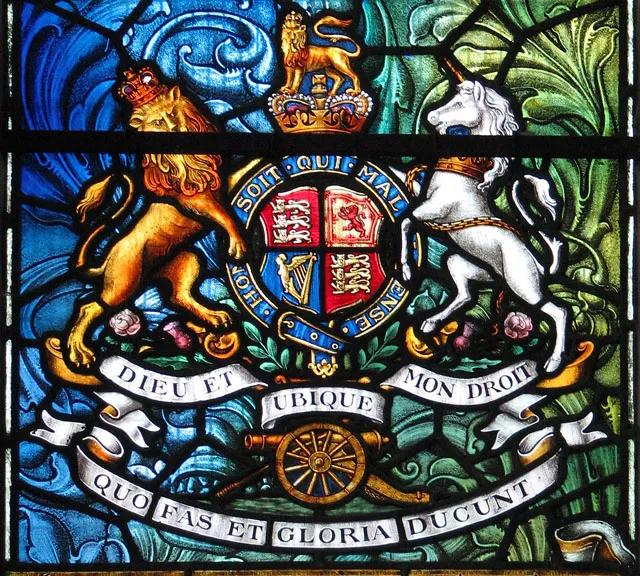
The glass itself was often utilitarian: drawn or rolled sheet glass, sometimes with a slight tint or texture, and frequently reused from elsewhere in the house. Figurative stained glass is unusual in these rooms, though a simple coloured border or a small decorative quarry may appear in a later Victorian or Edwardian pantry. The absence of religious or heraldic imagery should not be mistaken for an absence of interest. The interest lies in function, sequence and survival.
What the fabric can tell you
Begin with the opening rather than the pane. Is the frame original, or has it been replaced in softwood, hardwood or plastic? Do the glazing bars follow the original rhythm, or has a later hand enlarged the lights? Look at the lead: service glazing often used milled lead cames of modest profile, and the width and patina can help date a repair. Ferrous bars may show corrosion, particularly in sculleries where steam and washing were routine. Putty, paint and ironmongery are equally legible: a ventilated pane retained above a later sill is a small documentary clue.
Evidence of use is part of the significance. Hooks, shelf shadows, wear to a cill, a blocked ventilator or the remains of a wire guard all describe how the room worked. In a larder, the window may have been deliberately shaded by an external wall, a shutter or a tree; in a scullery, it may have been kept small to preserve privacy from a shared yard. These are not defects to be corrected without thought.
Condition: the quiet failures
Service windows often fail slowly and out of sight. Putty hardens and falls away, allowing water to sit against the glass. Lead cames fatigue, particularly where a light has been repainted repeatedly or where a frame has moved. Ferrous bars corrode and expand, cracking quarries. Timber frames may rot at the cill and jambs, especially where a scullery has been left unheated. Condensation, poor ventilation and modern sealants can trap moisture, accelerating decay.
A survey should distinguish between local failure and systemic failure. A few broken quarries and a loose pane may be repaired in situ. Sagging leadwork across a whole light, heavy corrosion of glazing bars or a frame that has lost its structural integrity will require more extensive work. The presence of later plastic glazing, expanded mesh or cement repairs is not necessarily a reason to replace the whole window; it is a reason to understand what has been lost and what remains.
Repair, sympathetic reglazing or retention
The default position should be retention. Service glazing is rare precisely because it was considered expendable. Where the lead, glass and frame are sound, modest repairs — re-puttying, splicing a quarry, consolidating a ferrous bar, easing a vent — will preserve both fabric and character. Cleaning should be cautious: aggressive methods can remove the very patina that records age. In food rooms, hygiene matters, but historic glass need not be stripped to a laboratory condition to be kept.
Sympathetic reglazing is appropriate where a light is beyond repair or has already been lost. Matching should extend to glass type, texture, lead profile, quarry size and the quality of the reflection. Modern float glass in an old service window can look inert; a drawn or restoration glass with slight irregularity will sit more comfortably. New lead should be shaped and soldered in a manner consistent with the original, and ventilation should be reinstated rather than sealed away.
Where a service wing is being brought back into domestic use — as a utility room, a boot room or an extended kitchen — the pressure to upgrade is considerable. Secondary glazing, internal shutters and discreet draught-proofing can improve comfort without sacrificing the historic opening. Security bars may be retained where they contribute to character, with attention to escape routes and modern safety. Listed building consent or conservation-area consent may be required for alterations, and early advice from a conservation officer is preferable to retrospective justification.
The ethics of modest light
It is tempting to treat a pantry window as a blank surface awaiting improvement. The better course is to read it as a designed element: a small aperture that balanced daylight against coolness, ventilation against security, and privacy against the practical need to see. Its plainness is not a lack of design but a different kind of design. In the careful repair of these overlooked windows, the service wing keeps its quiet testimony — not the light of display, but the light of work.