A New Light for an Old House: Commissioning Stained Glass with Historical Sensitivity

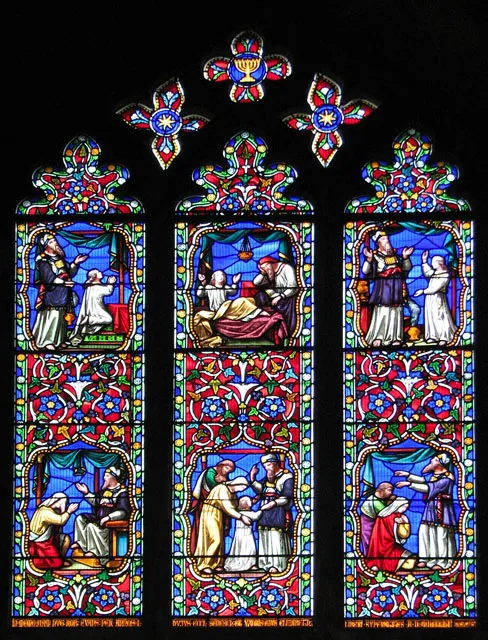
Photo: Jules & Jenny from Lincoln, UK, CC BY 2.0, via Wikimedia Commons
A missing window in a period house presents a familiar dilemma. The opening is there, the surrounding joinery may survive, and the historic glass has gone. Filling the gap with a modern plain pane can leave the facade diminished, while an overconfident imitation can look equally wrong. Commissioning new stained glass is a legitimate route, but it succeeds only when the brief is grounded in the architecture of the house rather than in a romantic idea of old glass.
Begin with the room and the opening
The design process should start with observation rather than pattern books. Consider the orientation, the amount of light the room needs, the privacy required and the relationship between this opening and neighbouring windows. Photograph the elevation, record the dimensions of the opening and note the profile of the existing frame. If fragments of the original glass survive, retain them as evidence. A craftsman will want to know whether the window sits above a door, beside it or within a main room, because each position imposes different structural and weatherproofing demands.
Briefing a stained-glass craftsman
Choose a studio with demonstrable experience of period work and conservation principles. The brief should be written and should include measured drawings, photographs, the age and style of the house, any surviving glass, the desired level of privacy and a realistic budget. Ask how the design will be developed: preliminary sketch, working cartoon, glass selection, leading and firing. Clarify the glass types proposed, since antique, cathedral, streaky and flashed glasses behave very differently in situ. Ask about lead width, solder joints, saddle bars and installation method. A good craftsman will welcome these questions rather than deflect them.
Matching palette and leading
Historic palettes are usually more restrained than modern eyes expect. Victorian and Edwardian schemes often rely on muted amber, ruby, green and blue, softened by textured clears and pale tints. Strong primary colours can overwhelm a period interior. Samples should be viewed in the actual opening at different times of day. Lead lines should follow the logic of the design rather than being used as a decorative screen; too many small pieces weaken a panel and increase its vulnerability to movement. The aim is sympathy, not forgery. New glass should sit comfortably beside surviving work without pretending to be original.
Consent in listed buildings and conservation areas
In England, listed building consent is required for alterations that affect the character of a listed building. In conservation areas, planning permission may be needed for certain external alterations, particularly where an Article 4 direction has removed permitted development rights. The regimes in Wales, Scotland and Northern Ireland differ, so local planning authority advice should be sought at the outset. A conservation officer will usually expect a design statement, material samples and a method statement. Consent is not a guarantee of quality; it is the beginning of a dialogue about appropriateness.
Safety glazing also deserves early attention. Glass in or beside doors may fall within critical locations under building regulations, and traditional stained glass may require secondary protection or a sympathetic laminated or toughened solution. This should be resolved with the craftsman and the local authority rather than after fabrication.
Costs and lead times in 2026
Budget figures vary by region, complexity and access. In 2026, a simple leaded-light panel might be quoted at £450 to £900 per square metre, while hand-painted and fired stained glass commonly falls between £1,500 and £4,000 per square metre. A modest door panel or fanlight may sit between £1,200 and £3,500, with design, access equipment and installation additional. Lead times of twelve to twenty-four weeks are typical for small studios; complex or listed schemes can take six to twelve months. Three comparable quotations, a written specification and a clear installation warranty are more useful than a single low price.
Judging the finished window
View the new glass in situ in morning and evening light. Check that the lead lines read cleanly, that painted work has been properly fired and that the panel is weathertight. A successful commission will not shout for attention. It will restore the opening, respect the house and allow the old fabric to remain the primary witness. In that sense, new glass is justified not by its age but by its manners.