Public House, Private Light: Reading and Repairing the Glass of a Former Victorian Inn
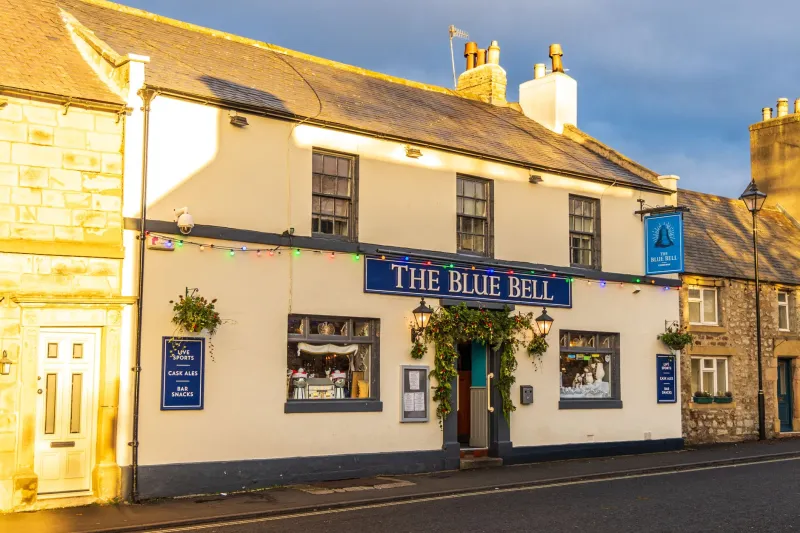
The conversion of a Victorian inn into a house tends to produce a familiar tension. The rooms may have become private, but much of the glazing was conceived for a public audience. Etched panels in a screen, a coloured border beside a doorway or a brilliant-cut motif in a saloon-bar window were not incidental decoration. They carried commercial messages, managed sightlines and helped to separate one kind of customer from another. In 2026, as more former coaching inns, gin palaces and roadside hotels are brought into domestic use, the conservation of this glass deserves to be treated as an architectural subject in its own right.
Reading the Fabric Before the Furniture
A conversion should begin with a survey rather than a scheme. Brewery-era glass is often mixed with later replacements, and the earliest surviving work may sit in secondary positions: over doors, in internal screens, beneath a later ceiling or behind modern fittings. Look for the characteristic signs of acid-etched decoration, where a resist was printed or painted onto the glass before hydrofluoric acid produced a milky surface. Look also for brilliant-cut work, in which a rotating wheel cut facets and grooves into clear glass, catching light in a manner quite unlike printed or applied film.
Brewery names, publican details, tobacco or spirit advertising and decorative borders can help to date a panel. So can the nature of the glass itself: cylindrical sheet glass, plate glass, and the slight irregularities of hand-made or early machine-made material. Frames matter as much as glazing. Original mouldings, iron saddle bars, lead cames and the quality of the putty all contribute to the evidence. Raking light is useful here; it reveals surface texture, shallow etching and the fine scratches that accumulate around handles and catches.
The aim is not to establish a single date for the whole building, but to understand the sequence of alterations. A former inn may retain an 1890s screen in the saloon, interwar etched panels in the lobby and post-war plain glazing in the public bar. Each layer has something to say about the changing trade and the changing street.
The Work the Glass Was Doing
Victorian and Edwardian pub glass performed several tasks at once. It advertised the brewery and the house, sometimes with considerable exuberance. It offered privacy to drinkers who did not wish to be observed from the pavement or the public bar. It divided space without blocking light, allowing a licensee to maintain separate rooms for different social groups. In the case of snob screens and etched partitions, it could create a careful hierarchy of visibility.
That combination of display and concealment is the key to conserving such glass in a house. The panels are not simply ornamental survivals; they are records of how the building once organised public life. A domestic scheme that retains them only as a nostalgic backdrop, lit from behind like a decorative feature, risks turning evidence into wallpaper. A scheme that strips them out to create open-plan brightness risks losing the very quality that makes the conversion distinctive.
The Privacy Ledger
The most common practical question is how much light the glass admits. Etched and brilliant-cut panels can be surprisingly generous in daylight, but dense acid-etched patterns and coloured borders reduce transmission. Domestic rooms also have different requirements from a bar. A former saloon may now be a sitting room, study or bedroom, and the balance between privacy from the street and daylight within the room must be considered window by window.
Where the etched glass survives in the lower lights, retain it and keep the upper lights clear if they are already clear. Avoid the temptation to replace obscure panels with clear glass simply because a room feels dark; the loss is usually irreversible, and the gain can often be achieved through lighting, decoration and the careful placement of furniture. Internal shutters, curtains and blinds can supplement the privacy already provided by the glass without altering the fabric. If a modern secondary glazing system is proposed, it should be detailed so that it does not trap moisture or obscure the original surface.
Repairing Etched and Brilliant-Cut Panels
Etched glass is a surface, not a coating, and it is easily damaged by abrasive cleaners, harsh alkalis and excessive rubbing. Routine cleaning should use a pH-neutral solution, distilled water where the local supply is hard, and a soft brush or cloth. Stubborn deposits around the edges of a panel may need the attention of a conservator rather than a household remedy. Avoid ammonia-based cleaners on old glass, particularly where the surface is already etched or where lead cames are present.
Brilliant-cut work requires a different discipline. The facets are cut into the body of the glass, and damage to an edge or a groove cannot be disguised with filler. A specialist can sometimes re-polish a small area, but the work must be judged against the risk of altering the original profile. Cracked or broken panels are best treated by a conservator experienced in the edge-bonding of historic glass, with the aim of retaining as much original material as possible. Releading should follow the original came profile and solder lines; a heavy modern lead may be structurally convenient but visually intrusive.
Where a panel is badly damaged, it is not always necessary to replace the whole window. Isolated quarries or small decorative elements can sometimes be matched or conserved in situ. The important principle is to record the existing arrangement before any intervention, so that the evidence survives even if a repair becomes necessary.
Domesticating Without Disinfecting
A converted inn should not be made to apologise for its former life. The etched screen, the coloured margin and the glazed partition are part of the building's character, and their survival is often one of the reasons the property was worth converting. Domestic interiors can absorb them well when the palette is quiet and the lighting is warm. Avoid the cold, even wash of recessed spotlights directly onto historic glass; it flattens the surface and makes every imperfection look like a defect. Table lamps, wall lights and a measured use of daylight are usually more sympathetic.
Equally, there is no need to preserve every later alteration as if it were original. The aim is discrimination, not antiquarianism. A well-considered scheme will retain the significant glazing, repair what is fragile, and allow modern additions to be legible as modern. In a former public house, that approach keeps the memory of communal use without turning the home into a museum of licensing.
A Workable Schedule
Begin with a condition survey that identifies each window by location, date, technique and significance. Note cracks, loose lead, failing putty, corrosion of iron bars and any evidence of water penetration. Establish whether the building is listed or within a conservation area, and take advice on consent before altering glazing, frames or secondary systems. Prioritise repairs that protect the glass from further damage, then cleaning, then cosmetic work. Keep a photographic record at every stage.
The result need not be pristine. A little surface wear, a slightly uneven lead line and the faint clouding of old etching are part of the material's history. The task is to keep the glass in use, not to restore it to a showroom condition it never had. In a former Victorian inn, the public room has become private, but the glass can still mediate between the two conditions: admitting light, withholding sight, and carrying the memory of a building that once kept its doors open to all comers.