Tall Lights, New Households: Reading and Conserving Board-School Glass
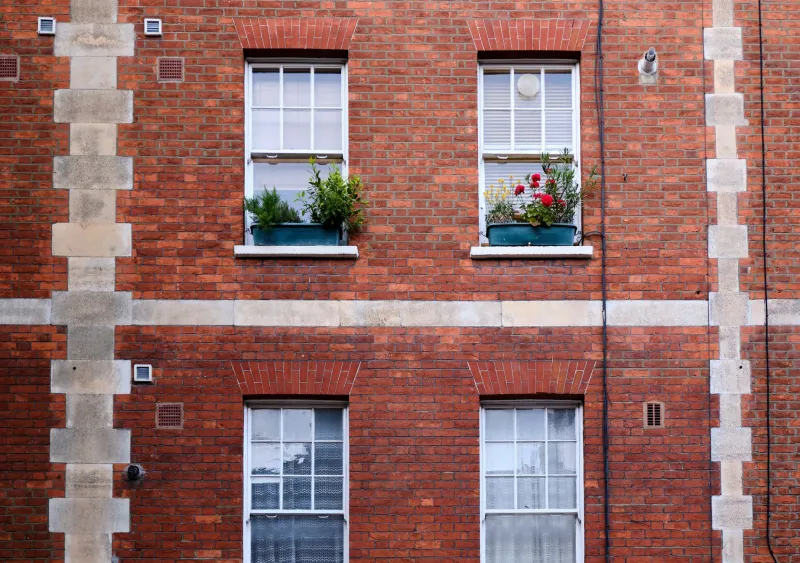
The board schools built across Britain after the 1870 Education Act were designed around light and air. Their windows were not domestic amenities but instruments of public health: tall openings that drew daylight deep into crowded classrooms and hopper or pivot lights that helped to purge stale air. When such buildings are converted into houses and flats, those windows become something else. They frame kitchens, stairwells and bedrooms, yet they still carry the institutional logic of the schoolroom. For the owner of a board-school conversion, the task is to recognise that logic before making changes.
Reading the School Window
Board-school glazing is rarely uniform. The largest windows often sit in repeated bays, with tall lower sashes and smaller upper lights. Coloured margin lights — narrow bands of red, blue or green glass at the edges of a pane — are a recurring motif, as are plain quarries, obscured lower panes and iron or steel ventilators. Some windows retain original lead cames; others have been releaded, repaired with modern glass or fitted with later safety glazing. The first step is to establish what is original, what is historic but later, and what is simply recent repair.
Look at the frame as well as the glass. A tall sash may have been altered to accept thicker glazing, or a pivot window may have lost its original ironmongery. Check for makers' marks, scratched dates or patterns of paint build-up that suggest earlier finishes. In converted schools, later internal partitions can make a window seem oddly placed; the original classroom plan usually explains why. A conservation officer or period-glass specialist can help to distinguish significant surviving fabric from later insertions, but the owner should keep a simple photographic record of each window before any work begins.
Consent, Comfort and the Domestic Brief
Many board schools are listed, lie within conservation areas or are locally listed. Even where listing is absent, the building's public and architectural history may carry weight in planning decisions. Listed-building consent is normally needed for alterations that affect character, and replacement glazing is rarely a neutral act. The aim should be to keep the window's proportions, sightlines and coloured margin lights, while addressing the legitimate domestic concerns of warmth, safety, security, acoustics and ventilation.
These concerns are real. Tall school windows can be draughty, cold and difficult to clean. Low bottom rails may be a safety risk for children, and large panes may fail without warning. Yet wholesale replacement with sealed double-glazed units often damages the very qualities that make the conversion desirable. A more measured approach begins with draught-proofing, careful repair, thermal curtains, shutters and secondary glazing. Secondary glazing can be designed to be discreet and removable, and it allows the historic window to remain in place. Ventilation should not be sealed away entirely; background vents or adjustable secondary units can help to control condensation.
Conserve, Relead or Adapt
The decision is rarely a simple choice between keeping and replacing. Three broad paths are useful.
Conservation in situ suits windows that are structurally sound but tired. Loose putty can be renewed, minor breaks repaired with compatible glass, and ironmongery serviced. The aim is to arrest decay without erasing evidence of age.
Releading is appropriate when the lead matrix has failed, the glass is loose or the window has deformed. A good relead preserves the original glass and the original leading pattern, renewing only what is necessary. It is a craft operation, not a glazing upgrade, and should be carried out by a specialist who understands historic glass. Releading also offers an opportunity to check the frame, ventilation and weatherproofing.
Sympathetic adaptation may be justified where safety, thermal performance or access demands it. This might mean laminated safety glass in critical locations, discreet secondary glazing, window restrictors or a well-designed internal screen. It should not mean discarding coloured margin lights or replacing leaded lights with sealed units that imitate them poorly. Where safety glass is required, the type and position should be agreed with a specialist and, where relevant, the local authority. Safety film is not a substitute for safety glass and should not be presented as one.
A Schoolroom at Home
The domestic life of a board-school window is different from its institutional one. Tall lights flood rooms with daylight, but they also expose large areas to heat loss and solar gain. Furniture, curtains and internal glazing should be planned around the windows rather than against them. In stairwells and halls, the height of the openings can be dramatic; lighting and decoration should respect that verticality. In family rooms, restrictors, robust catches and clear glazing treatments can reduce risk without turning the window into a barrier.
Maintenance should be seasonal rather than crisis-driven. Check putty and lead for movement, clear debris from ventilation slots, and watch for condensation between secondary and primary glazing. Keep a record of repairs, glazing types and finishes. As converted board schools settle into their second century of use in 2026, the most successful examples are those where the window is understood as part of the building's public history, not merely as a hole in the wall.
Custodianship in Daylight
The board-school window was designed to make learning possible. In a converted home, it can still make daily life brighter, but only if its fabric is read with patience. Conservation, releading and adaptation are not rival camps; they are stages in a careful conversation between the building, the household and the craft of glass. The aim is not to freeze the window in time, but to keep its tall light and coloured margins legible for the next generation of occupants.