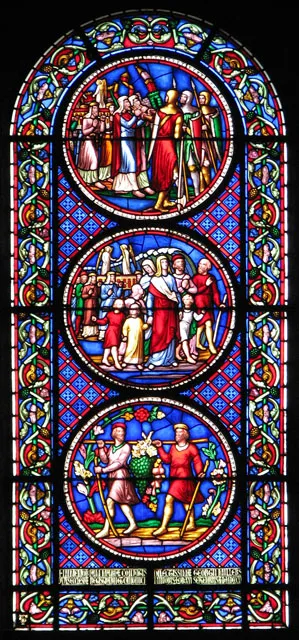
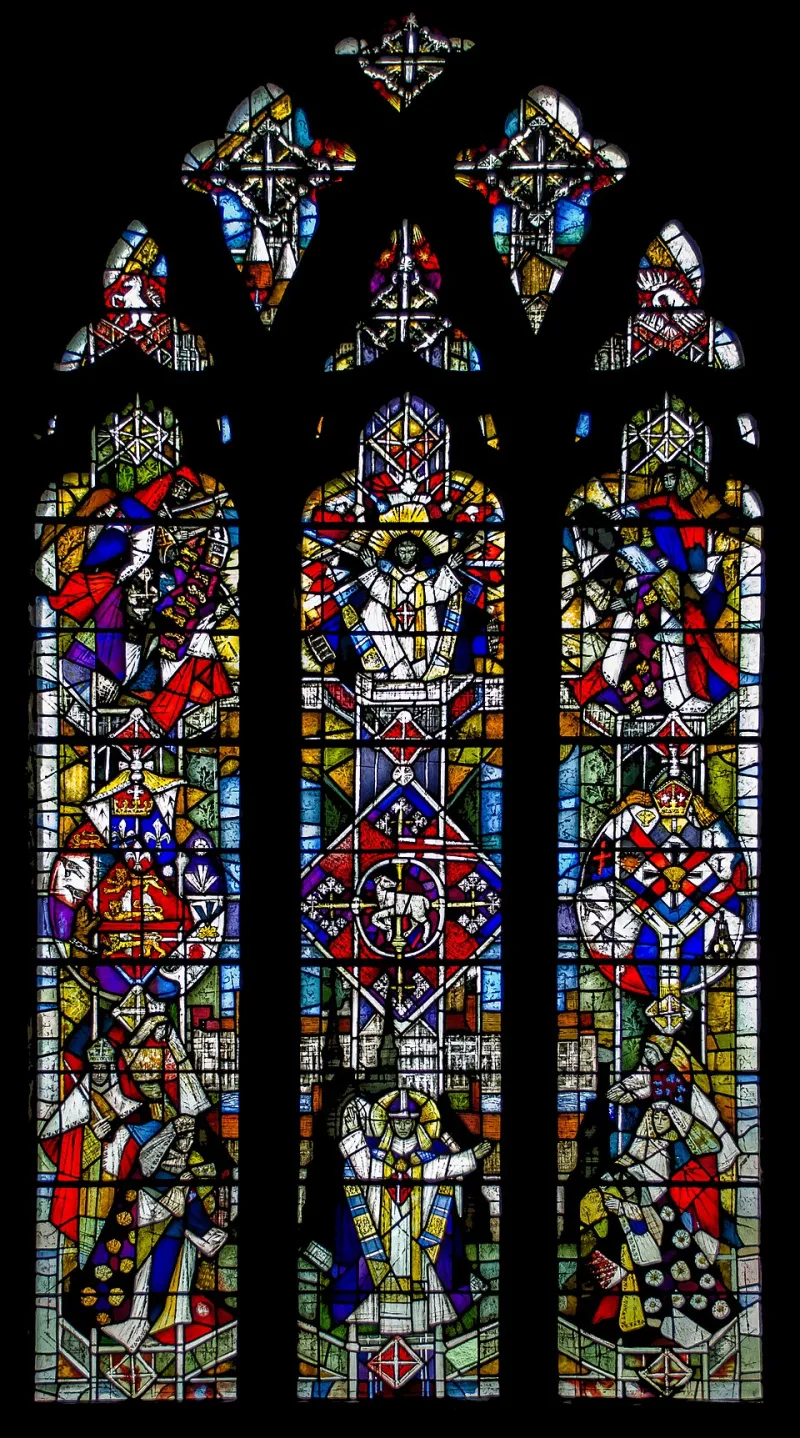
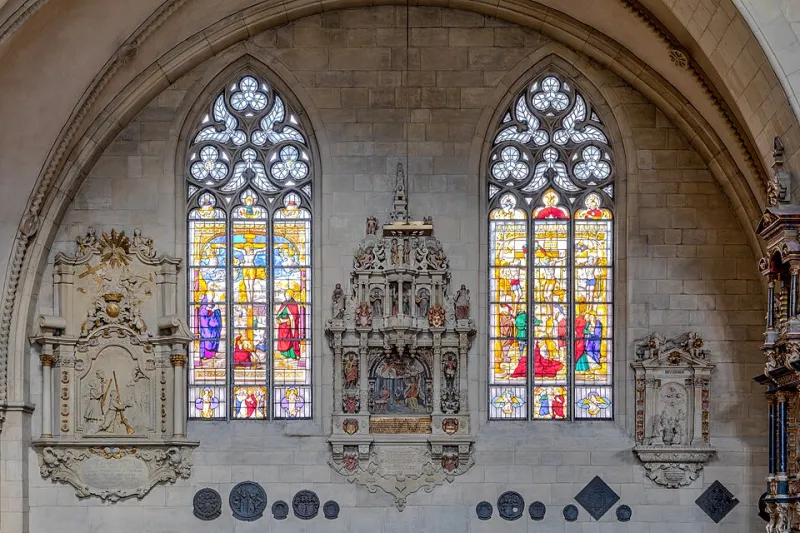
The Capital in the Casement: Historic Glazing as Asset and Obligation
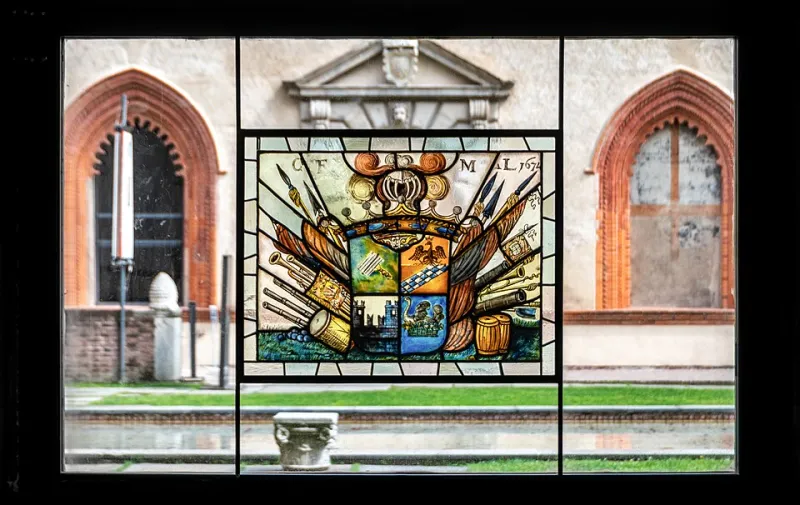
Photo: Julian Lupyan, CC0, via Wikimedia Commons
In the British period market, light is part of the inventory. A Georgian fanlight, a Victorian stair window or an Edwardian leaded casement is rarely the reason a buyer first views a house, but it can be the detail that confirms the house is what it claims to be. That confirmation has a price — though not a fixed one. Original stained and leaded glass is best understood as cultural capital with a maintenance schedule: capable of supporting saleability, but equally capable of becoming a negotiation point when its condition is uncertain.
Recognition before romance
Estate agents are fond of the phrase original features, and buyers respond to it. Yet the market does not value glass in the abstract. It values authenticity, completeness and evidence of care. A window that retains its original leaded lights, painted quarries or figurative panels contributes to the character of a period home in a way that a modern replica rarely does. A window that has been patched with later glass, re-leaded without regard to the original profile, or sealed with modern materials may still be attractive, but it tells a less coherent story.
Valuation surveyors seldom isolate glazing as a separate line item. It sits within the fabric of the building, contributing to both character and condition. That is why the financial effect is indirect. In a competitive street of Victorian villas, original glass can reinforce the authenticity that buyers are already paying for. In a less sensitive market, the same glass may be read as a maintenance burden, a source of heat loss or a reason to negotiate.
The premium is conditional
The premium is strongest where the glazing is original to the house, substantially complete, sound in its lead and supported by records. Photographs, conservation reports and invoices for previous repairs are not romantic documents, but they are persuasive ones. They show a buyer that the glass has been understood rather than merely tolerated.
The premium weakens where condition is poor or uncertain. Failed lead, corroded ferramenta, cracked quarries, distorted panels and condensation between layers all invite questions. A buyer may still love the window, but their surveyor will price the risk. In conservation areas and listed buildings, the method of repair also matters: consent, specialist oversight and like-for-like conservation can add cost and time. In some cases, ornate glass narrows the buyer pool because it reduces light or privacy. The asset is therefore not the glass alone. It is the glass plus its condition, its documentation and its fit with the house.
The conservation arithmetic
Conservation is not a single invoice. Re-leading, re-puttying, cleaning, repair of breaks, joinery repairs, scaffolding, temporary protection and redecoration all belong in the same ledger. Lead has a finite life. Putty hardens and cracks. Ferramenta corrodes. Deferred maintenance rarely saves money; it usually transfers cost to a later owner at a less convenient moment.
Owners should request itemised quotations that distinguish inspection, removal, repair, re-leading, reinstallation and making good. A contingency is prudent, particularly where panels are painted or where access is difficult. The true cost of keeping historic glass is not only the craftsperson's fee. It is the cost of doing the work properly, at the right time, before the damage becomes irreversible.
Insurance and the small print
Standard home insurance may cover sudden accidental damage, but it does not necessarily cover gradual deterioration. Wear and tear, faulty workmanship, and the additional cost of matching historic fabric are common exclusions or limitations. A policy may offer replacement with modern glass where conservation repair would be more appropriate. Owners should notify their insurer of significant historic glazing, check that the buildings sum insured is adequate, and ask specifically about conservation-grade reinstatement and cover during works.
A photographic record is useful here. So is a specialist condition report. Insurance is not conservation, but the two meet at the point of loss. The owner who can evidence the pre-loss condition of a window is in a stronger position than one who cannot.
What surveyors will say
Surveyors are trained to flag risk, not to write a conservation treatise. They may note failed lead, cracked glass, corrosion, poor ventilation, condensation, unsafe glazing or later infill. A HomeBuyer report is not a specialist glass survey. Before exchange, a buyer should commission a condition survey from someone who understands historic glazing and can distinguish between urgent repair and routine maintenance.
A balanced ledger
Historic glass adds value when it is legible, sound and documented. It subtracts when it is fragile, altered and unexplained. The clear-eyed view is neither to treat stained glass as a guaranteed premium nor to dismiss it as a liability. It is to price the asset and the obligation together. In the British period market, the windows are part of the argument for the house. The owner's task is to make sure that argument remains convincing.