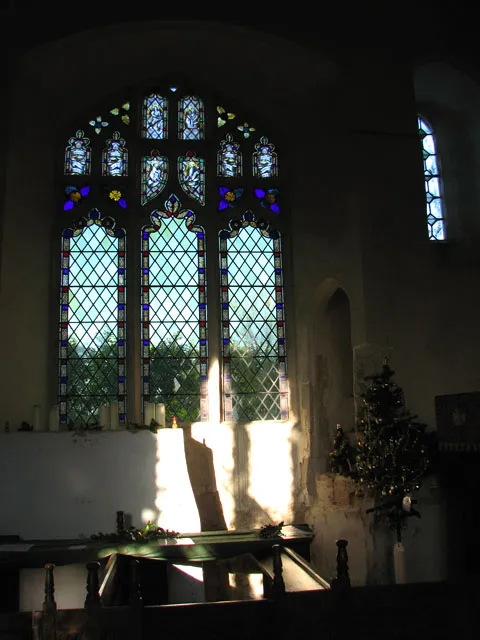
The Geometry of Daylight: Caring for Stained Glass in British Bay Windows
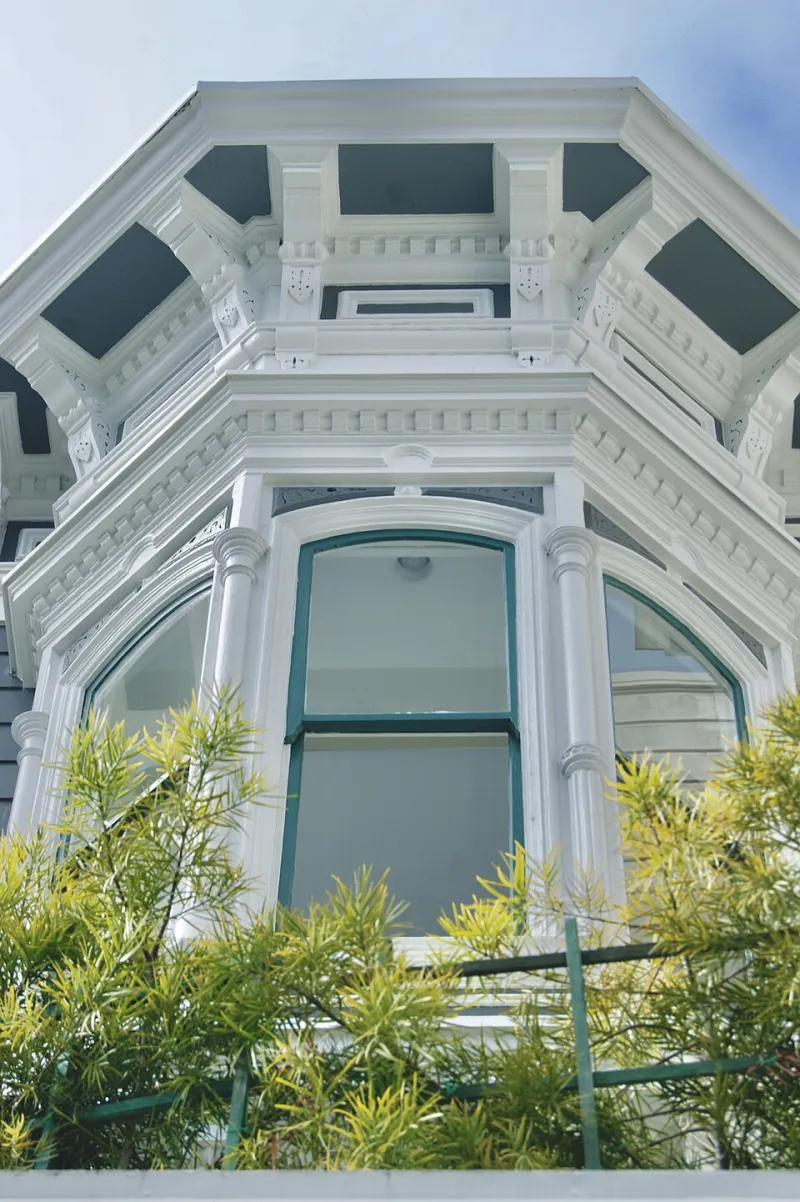
Photo: Louis H. G., CC BY-SA 4.0, via Wikimedia Commons
Bay windows are among the most eloquent devices in the British domestic repertoire. They push the façade outward, gather daylight from three directions and give a room a shallow stage on which the changing weather can perform. Where stained or leaded glass survives in a Victorian or Edwardian bay, the effect is especially pronounced: coloured quarries and patterned borders are lit from the side as well as the front, so the window reads differently at breakfast and at dusk. That same exposure makes the bay one of the more demanding places in a period house to care for. A three-sided window is a three-sided weather machine, and its glass, lead and ironwork must be understood together before any repair is commissioned.
Reading the Bay Before Repair
Begin with the pattern, not the defects. A canted bay, with its angled returns, and a square bay, with two right-angled corners, each impose their own rhythm on the glazing. In many late-Victorian and Edwardian houses the bay was treated as a small architectural composition: a central light or pair of lights, flanking panels, a repeating border and perhaps a coloured roundel or floral motif in the upper quarries. Photograph each elevation straight on, draw a simple key and note where the pattern repeats. This record matters because a bay is often altered piecemeal. One panel may have been replaced after a break, another may retain its original glass while its neighbour has been reglazed in plain quarries. The eye should be trained to spot differences in glass colour, lead profile, paint build-up and the spacing of saddle bars before cleaning or repair obscures them.
Inspect from both sides. From within, look for loose putty, corroded lead, cracked quarries and condensation trails. From without, check the condition of the paint film, the soundness of the frame and the presence of rust staining around ferramenta, the horizontal saddle bars that steady the leaded panel against wind pressure. A bay is also a structural junction. Movement at the corner posts, a dropped lintel or failed brackets can transfer stress into the glazing, so any repair should begin with a cautious reading of the carpentry and masonry around the window, not only the glass itself.
The Mechanics of a Three-Sided Window
The chief enemies of bay glazing are gravity, thermal movement and water. Lead cames are soft and creep over time; in a tall light they can sag between saddle bars, opening the joints and allowing water to enter. Rusted saddle bars expand as they corrode and can crack the glass they were installed to protect. Condensation is equally insidious. A bay presents a large area of cold glass to a warm room, and where ventilation is poor the result is persistent moisture on the inner face, corrosion of the lead and staining of the painted frame. Draughts often follow the perimeter of opening lights, along meeting stiles and around the junction between the bay and the main wall.
The practical question is whether work can be done in situ. If the lead is sound, the saddle bars are secure, the glass is stable and the defects are limited to local putty loss or a single broken quarry, a conservator may be able to consolidate and repair in place. If the lead has become brittle, if several quarries are cracked, if the panel has lost its rigidity or if rust has deformed the bars, removal to a workshop is usually the more responsible course. Releading, cementing and the replacement of corroded ferramenta are bench tasks that allow the panel to be supported properly and the original glass to be retained wherever possible.
Repairs in Place and at the Bench
In situ work should be conservative. Loose putty can be raked out and renewed with a suitable linseed-oil putty, and minor cracks can be stabilised by a specialist without dismantling the panel. Broken quarries should be matched for colour, texture and thickness rather than replaced with modern cathedral glass that reads too evenly in a period bay. Where saddle bars are rusted, the aim is not simply to paint over the corrosion but to assess whether the bar can be treated and retained or must be replaced in a compatible metal. Any new bar should respect the original spacing and fixings, and the glass should never be forced back into a distorted frame.
At the bench, a conservator will normally clean the glass, repair breaks with appropriate materials, re-lead or repair the cames, re-cement the panel and replace failed saddle bars. The finished panel should be rehung with isolation between incompatible metals and with drainage and ventilation in mind. Good practice also includes a written record of what was original, what was renewed and what was merely stabilised. In a bay, that record is valuable because the window is seen from several angles and small differences in lead or glass can become conspicuous when the light changes.
Weathering Without Sealing Away Character
Draught-proofing a bay requires restraint. Brush seals, discreet secondary glazing, internal shutters and heavy curtains can all reduce discomfort without altering the historic glass. Silicone sealants, expanding foam and indiscriminate mastic should be avoided: they trap moisture, damage historic surfaces and often make condensation worse. Secondary glazing, where acceptable, should be ventilated and removable so that the primary window can breathe and be inspected. In a Conservation Area or listed building, consent may be required, and the visual impact of any addition should be judged from inside the room as well as from the street.
Thermal comfort is not only a matter of sealing. A bay loses heat through the glass, through the frame and through the junctions where the projection meets the wall. Insulating curtains, well-fitted blinds and the careful repair of decayed putty and paint will do more for the room than a heavy-handed replacement window. Ventilation should be maintained, especially in kitchens, bathrooms and busy living rooms, because a dry window is a longer-lived window. The aim is a bay that remains a source of daylight and a piece of period character, not a sealed display case.
A Maintenance Calendar for the Bay
A bay rewards regular, modest attention. Inspect the glazing each spring and autumn, looking for loose putty, new cracks, rust stains and condensation. Check that gutters above the bay are clear and that water is not tracking into the cornice or the floor of the projection. Keep the paint film sound, but do not allow paint to bridge the lead or block ventilation. Every few years, ask a conservator to review the saddle bars, the lead and the fixings. Between those visits, keep a photographic record. In a Victorian or Edwardian bay, the window is both an ornament and a working part of the house. Repair it with patience, and the three sides of light will continue to do what they were made to do: gather the day, colour it and bring it into the room.